14 October 2026
Why Sea Buckthorn Is Called a Himalayan Superfruit: Nutrients and Potential Benefits
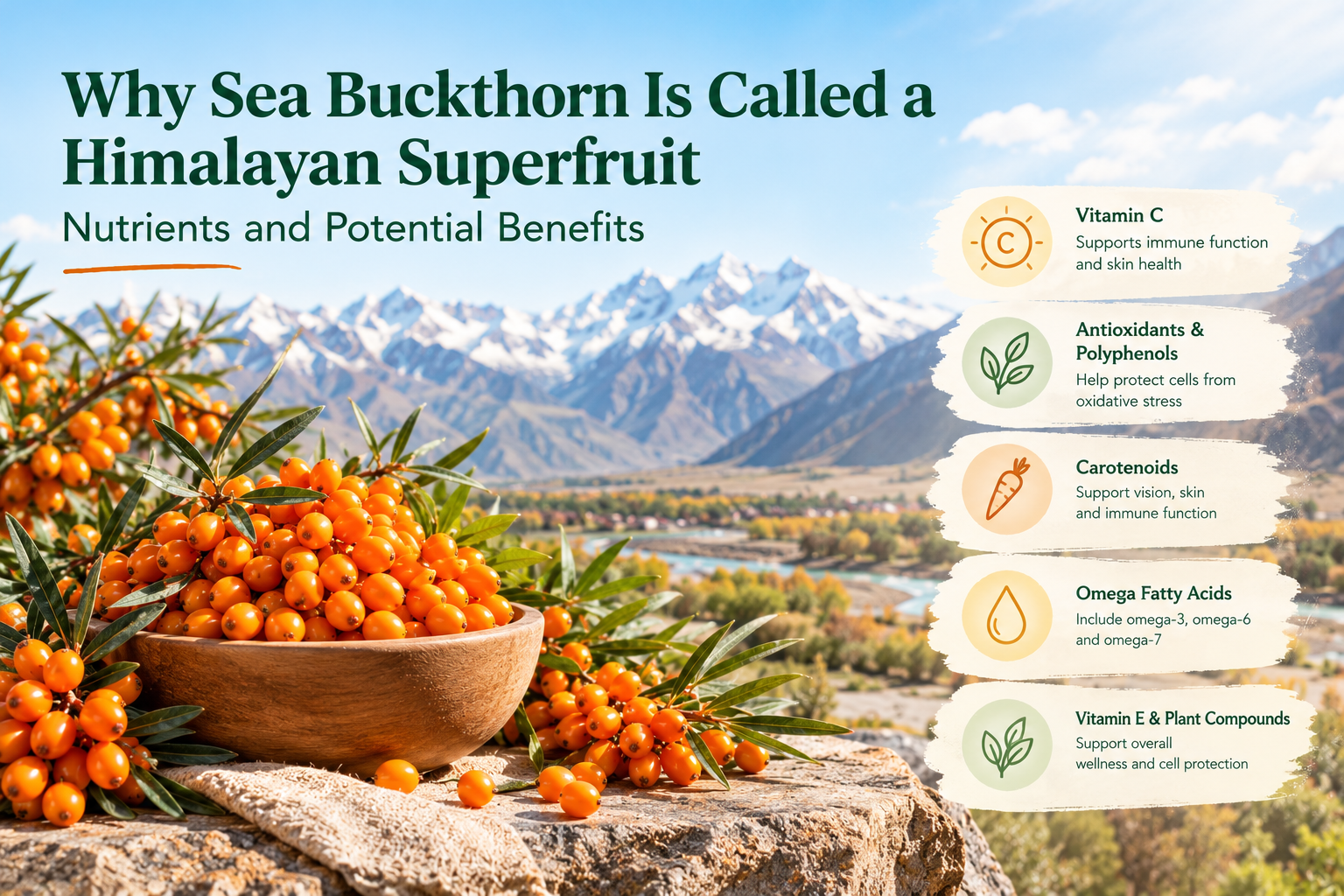
Sea buckthorn stands out among fruits for its bright orange berries and impressive nutritional profile. Found in high-altitude regions such as Ladakh, this resilient plant has adapted to challenging growing conditions while producing berries rich in vitamins, antioxidants, and beneficial plant compounds. Often referred to as a Himalayan superfruit, sea buckthorn has attracted interest for its unique combination of nutrients and potential role in everyday wellness. Let’s take a closer look at what makes this berry distinctive and what its nutritional value may offer.
Sea buckthorn is often called a Himalayan superfruit because it contains a variety of naturally occurring nutrients, antioxidants, and plant compounds. From vitamin C to omega fatty acids, its nutritional profile makes it an interesting addition to the world of everyday wellness.
But what makes this berry special? Let’s explore where sea buckthorn comes from, what it contains, and the potential benefits of Sea buckthorn, it may offer.
What Makes Sea Buckthorn a Himalayan Superfruit?
Sea buckthorn (Hippophae rhamnoides) is a hardy shrub that grows in cold, mountainous regions of Asia and Europe. Its orange berries are valued for their distinctive taste and diverse nutritional composition.
The fruit contains vitamins, carotenoids, polyphenols, fatty acids, and other naturally occurring compounds. However, their amounts vary depending on the variety, growing conditions, ripeness, and processing method. Scientific review of sea buckthorn nutrition.
Here are some of the key nutrients that make this berry interesting.
Nutrients Found in Sea Buckthorn Berries
1. Vitamin C
Sea buckthorn berries can be a source of vitamin C, an essential nutrient that supports normal immune function, helps protect cells from oxidative stress, and contributes to collagen formation for healthy skin.
The actual vitamin C content depends on the berry variety and how the fruit is processed. Fresh berries, juice, and processed products may therefore provide different amounts.
2. Antioxidants and Polyphenols
Sea buckthorn contains naturally occurring antioxidants, including flavonoids and phenolic compounds. These substances are studied for their role in protecting cells from oxidative stress.
Vitamin C and certain plant compounds contribute to the berry's antioxidant profile. However, laboratory findings do not automatically mean that consuming sea buckthorn will prevent or treat a disease.
3. Carotenoids
The bright orange colour of sea buckthorn berries comes partly from carotenoids, including beta-carotene. Some carotenoids can be converted into vitamin A in the body, depending on the specific compound.
Vitamin A plays a role in normal vision, immune function, and maintaining healthy skin. The amount available from a sea buckthorn product depends on its composition and processing.
4. Omega Fatty Acids
Sea buckthorn is particularly interesting because its different parts contain several types of fatty acids. Its pulp oil and seed oil have different fatty-acid profiles.
• Omega-3: Includes alpha-linolenic acid, an essential fatty acid.
• Omega-6: Includes linoleic acid, which the body needs for normal growth and cell function.
• Omega-7: Palmitoleic acid is found in sea buckthorn pulp oil and is one of the fatty acids that makes it distinctive.
The amount of each fatty acid varies by plant part and product. It is important to check whether a supplement contains seed oil, pulp oil, or a combination rather than assuming all sea buckthorn oils are alike.
5. Vitamin E and Other Plant Compounds
Sea buckthorn also contains vitamin E, phytosterols, organic acids, and other compounds. Vitamin E contributes to protecting cells from oxidative stress, while phytosterols are naturally occurring plant compounds.
Together, these components contribute to the berry's nutritional value. Nevertheless, the exact nutrient profile differs between fresh fruit, dried berries, juice, powder, and oil.
Potential Benefits of Sea Buckthorn
Sea buckthorn is attracting interest for its nutritional qualities and potential health applications. Research is promising in some areas, but human evidence remains limited for many specific benefits.
Supports Normal Immune Function
Sea buckthorn can contribute vitamin C and other plant compounds to the diet. Vitamin C supports the normal functioning of the immune system. However, sea buckthorn should not be considered a treatment for infections or a replacement for a balanced diet.
Helps Support Healthy-Looking Skin
Vitamin C contributes to collagen formation, while sea buckthorn oils contain fatty acids that can help condition the skin. These properties make sea buckthorn an ingredient of interest in skincare products.
The effects depend on the formulation and how the product is used. Sea buckthorn oil should not be assumed to treat acne, eczema, or other skin conditions.
Adds Variety to Everyday Nutrition
Sea buckthorn can be consumed in several forms, including juice, dried berries, and powder. These options make it easier to include the fruit in different meals and drinks.
Choosing a product with clear ingredient and nutrition information can help you understand what it contributes to your diet.
May Support Overall Antioxidant Intake
The fruit contains vitamin C, carotenoids, and polyphenols, which contribute to its antioxidant profile. Including sea buckthorn as part of a varied diet can help increase the range of plant compounds you consume.
However, it is not a detox treatment or a guaranteed way to prevent chronic disease. Its benefits should be considered alongside your overall eating habits and lifestyle.
How to Include Sea Buckthorn in Your Daily Routine
You do not need to make major changes to your diet to enjoy sea buckthorn. Choose a form that suits your preferences and follow the product's serving instructions.
• Sea buckthorn juice or pulp: Mix the recommended serving with water if you prefer a milder taste.
• Dried berries: Add them to oats, breakfast bowls, or homemade trail mixes.
• Sea buckthorn powder: Mix it into smoothies or selected recipes according to the label.
• Sea buckthorn oil capsules: Follow the serving directions provided by the manufacturer.
• Sea buckthorn skincare oil: Choose a product formulated for topical use and patch-test it before regular application.
Remember that these products are not nutritionally interchangeable. Juice, dried fruit, and oil contain different amounts and types of nutrients.
What to Check When Choosing a Sea Buckthorn Product
If you are planning to add sea buckthorn to your routine, look beyond the term “superfruit” on the packaging.
• Ingredients: Check whether the product contains pure juice, pulp, dried fruit, powder, seed oil, or pulp oil.
• Processing: Look for information about how the product is made and stored.
• Added ingredients: Check for added sugar, flavourings, or other ingredients where relevant.
• Quality information: Prefer brands that clearly communicate sourcing, testing, and product specifications.
• Serving instructions: Follow the label rather than assuming that a larger serving offers greater benefits.
WellWith offers sea buckthorn products in different formats, including juice, dried berries, and supplements. When comparing options, review each product's ingredients, intended use, and available quality information to decide which suits your needs.
Final Thoughts
Sea buckthorn has earned its reputation as a Himalayan superfruit because of its distinctive growing environment and diverse nutritional composition. Its berries contain vitamin C, carotenoids, polyphenols, and other plant compounds, while its seed and pulp oils offer different fatty-acid profiles.
These qualities make sea buckthorn a valuable ingredient to explore as part of a balanced diet and everyday self-care routine. Still, no single fruit can provide every nutrient the body needs, and many proposed health benefits require more research in humans.
The best approach is to enjoy sea buckthorn for its nutritional qualities, choose products carefully, and combine them with a varied diet and healthy lifestyle.
Frequently Asked Questions
1. Why is sea buckthorn called a Himalayan superfruit?
Sea buckthorn is associated with the Himalayan region and is called a superfruit because its berries contain a range of nutrients and plant compounds, including vitamin C, carotenoids, polyphenols, and fatty acids.
2. Is sea buckthorn rich in vitamin C?
Sea buckthorn can contain substantial amounts of vitamin C, although the actual amount varies by variety, ripeness, and processing method.
3. Does sea buckthorn contain omega-7?
Yes. Palmitoleic acid, an omega-7 fatty acid, is found in sea buckthorn pulp oil. Its concentration varies by product and plant material.
4. What is the best way to consume sea buckthorn?
You can choose juice, dried berries, or powder depending on your preferences. Follow the product label for serving instructions.
5. Can sea buckthorn replace vitamin supplements?
Not necessarily. Its nutrient content varies, and it may not provide the amounts of vitamins or minerals you need. If you have a diagnosed deficiency or take supplements for a medical reason, consult a healthcare professional before making changes.